A water offering of remembrance

Tarpan

Tarpan is an offering of water made with remembrance and recitation. In Pitru Tarpan, the family remembers ancestors; the word can also be used for offerings addressed to other groups in broader ritual contexts.

Use this guide as an introduction, then ask a qualified pandit what applies to your family’s tradition.

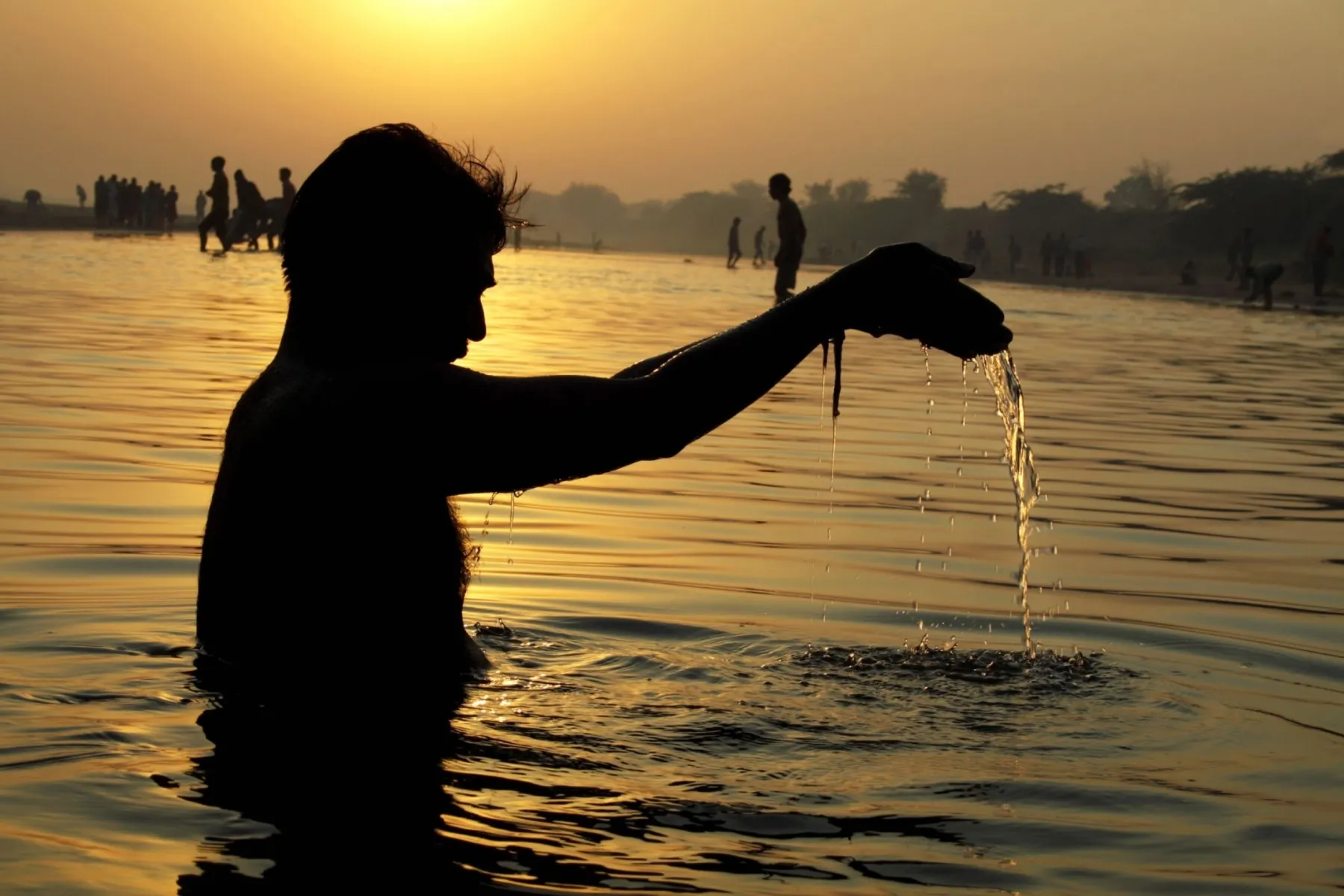
A person offering water with cupped hands at the Triveni Sangam
A water offering at the Triveni Sangam in Prayagraj. Posture and recitation should be confirmed for the family’s practice.
Plain languageWhat the term means
Family contextQuestions to bring
Place mattersLocal practice can differ
Pandit guidanceConfirm before you arrange
What makes it distinct

Water is central to Tarpan. It is not simply another name for Pind Daan, and a short water offering should not be presented as the full Shradh sequence.

When families ask

The context matters as much as the name.

Families ask about Tarpan during Pitrupaksha, on an ancestor’s tithi and as part of other observances. Frequency, direction, hand position and mantras can differ, so a generic internet sequence is not a substitute for family guidance.

Who participates

Explain who is available.

Tell the pandit who proposes to offer the water and which ancestors are being remembered. Ask how maternal and paternal lineages are named in the practice your family follows.

A simple overview

What to discuss before the rite.

The steps can differ by family tradition and place. Use this overview to prepare questions, then ask the pandit to explain the actual sequence.

  1. 01

    The family clarifies whom the offering is for.

  2. 02

    The pandit explains posture, direction and how the water is held.

  3. 03

    Names or mantras are recited as the water is offered.

  4. 04

    The family is told how to close the observance respectfully.

Before the conversation

Keep these family details nearby.

  • Clean water in a suitable vessel
  • Black sesame or darbha only when directed
  • Ancestor names and family relationships
  • A safe, appropriate place for offering the water

Wait before buying materials. The pandit should confirm what is needed for the rite, place and family tradition.

Questions worth asking the pandit.

  1. Is this Pitru Tarpan or part of a wider rite?
  2. Whose names should be spoken, and in what order?
  3. What should we do if a name or gotra is not known?
  4. Can it be done safely at home, and where should the water go?
Choosing a place

Sacred sites families commonly ask us about.

These places are starting points. Ask whether this rite is traditionally performed at the site you are considering.

Before you decide

Tarpan questions.

Practice can differ by lineage, region and family circumstances. Ask the pandit to explain what applies to your family.

Read all FAQs
Is Tarpan only performed beside a river?

Not in every tradition. A sacred river can be meaningful, while some families are guided to make the offering at home or another suitable place. Ask how the water should be handled.

Do black sesame and darbha always have to be used?

They are customary in many Pitru Tarpan practices, but the pandit should confirm the materials rather than the family relying on a universal checklist.

Can Tarpan replace a complete Shradh?

That is not a safe conclusion from a website. Tarpan can be one part of Shradh or a separate observance, depending on the family’s guidance.

Tarpan enquiry

Begin with what your family already knows.

We will reply by phone or WhatsApp and help you organise the questions. Nothing is booked or paid for on this website.