
Rameshwaram
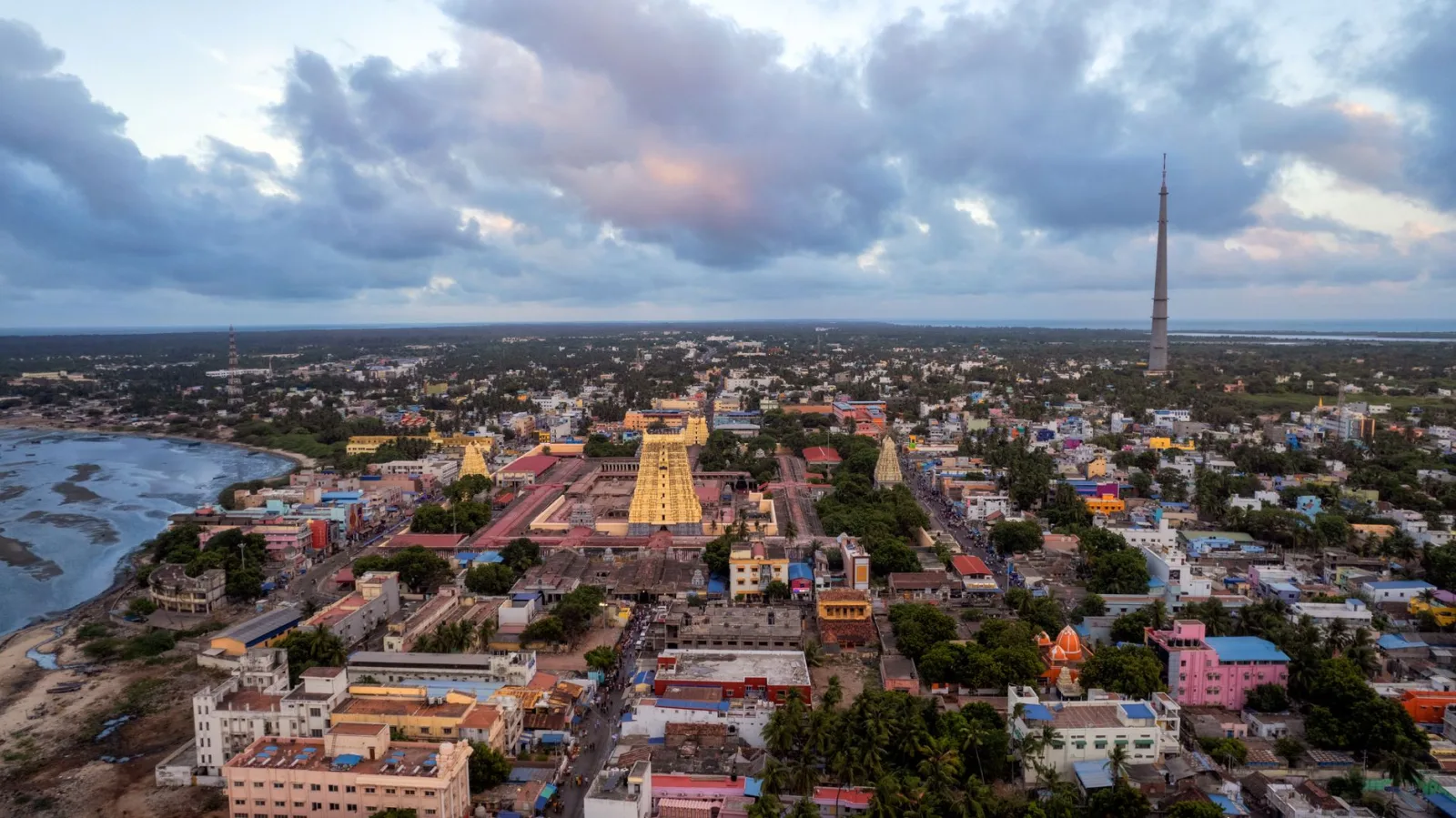
An island off the Tamil coast, joined to the mainland by a bridge. The only one of our eight sites where the rites are performed at the sea rather than at a river.
Not a southern version of Gaya.
Everything else on this site describes rites in the northern idiom — a river, a ghat, a pandit working in Sanskrit and Hindi. Rameshwaram is not that. It belongs to a southern ritual tradition with its own procedures, its own liturgical language in practice, and its own sequence of observance. The offerings are made at the sea, the temple governs the day, and the terminology a family hears may differ from the words used elsewhere on this site.
We flag this plainly because families sometimes arrive expecting Gaya with a beach. If your household keeps southern practice, this will feel correct and familiar. If your practice is northern and you are choosing Rameshwaram for the setting, a coordinator will talk you through what will be different before you commit.
The rite here is not a translation of the northern one. It is its own thing, done properly.
Where the land ends.
The island is bound up with the Ramayana; the tradition holds that Rama worshipped here. Tamil, Telugu and Malayalam-speaking families may also approach its ancestor rites through customs different from those encountered at northern pilgrimage sites. Ask which practice will be followed rather than assuming the two are interchangeable.
There is also the plain fact of the geography. Offerings made into the open sea, at the edge of the subcontinent, are a different experience from offerings made into a river between two banks. Families describe it differently afterwards. That is not a claim about efficacy — only an observation about what the place is like.
Where a rite here happens.
The rites take place at Agni Theertham, the stretch of shore directly in front of the temple. The temple itself governs the rest of the day — including the sequence of bathing at its wells, which is a distinctive part of observance here.
The sea sets the terms here.
Agni Theertham is generally shallow and calm, which is part of why observance settled there. But it is still open sea, and the northeast monsoon between roughly October and December brings rough water, heavy rain and occasional cyclonic weather to this coast.
Rameshwaram does not follow the same seasonal opening pattern as Brahmakapal, but sea or weather conditions can still move the plan on the day. Ask what contingency will apply before travelling.
What families arrange at the shore.
How a morning unfolds.
- Bathe at Agni Theertham At the shore in front of the temple, before anything else.
- The temple wells The bathing sequence within the temple, taken in order, as observance here requires.
- Sankalpa at the shore The vow that opens the rite, naming the family and the ancestors remembered.
- The offerings, then darshan Made at the water’s edge, each ancestor named, followed by darshan at the temple.
Further than it looks.
- Fly to Madurai (IXM), then roughly three to four hours by road.
- Rail direct to Rameswaram, across the bridge from the mainland.
- It is a long way from our northern sites — plan it as its own journey, not an add-on.
- Nobody has to travel — rites can be performed on a family’s behalf.
Ask for what you need.
What helps to have ready.
- Which tradition your family keeps — southern or northern practice.
- The language you want the rite explained in.
- Names of those being remembered, as your family says them.
- Gotra and any date of passing, if your family holds them.
Tell us which tradition your family keeps.
It decides more here than at any other site — the procedure, the language, and who the right pandit is. Nothing is booked or paid for on this website.
Continue to the enquiry form
Rameshwaram is already selected. Add the details you know and we will reply by phone or WhatsApp.
We use these details to reply to this enquiry.
- The southern procedure proposed for the family and how it differs from any practice already known
- Current temple-well access, bathing sequence and temple protocol
- Sea conditions, northeast monsoon and the weather contingency
Ask the pandit to explain the religious procedure.
Ask us to reconfirm sea, temple and meeting details for your date.
Tell us about any mobility, language or participation needs.