Food offerings made in an ancestor’s name

Pind Daan

Pind Daan centres on pindas—offerings commonly prepared from rice or grain and other materials named by the family’s tradition. It usually sits within a wider Shradh sequence rather than standing for every ancestor rite.

Use this guide as an introduction, then ask a qualified pandit what applies to your family’s tradition.

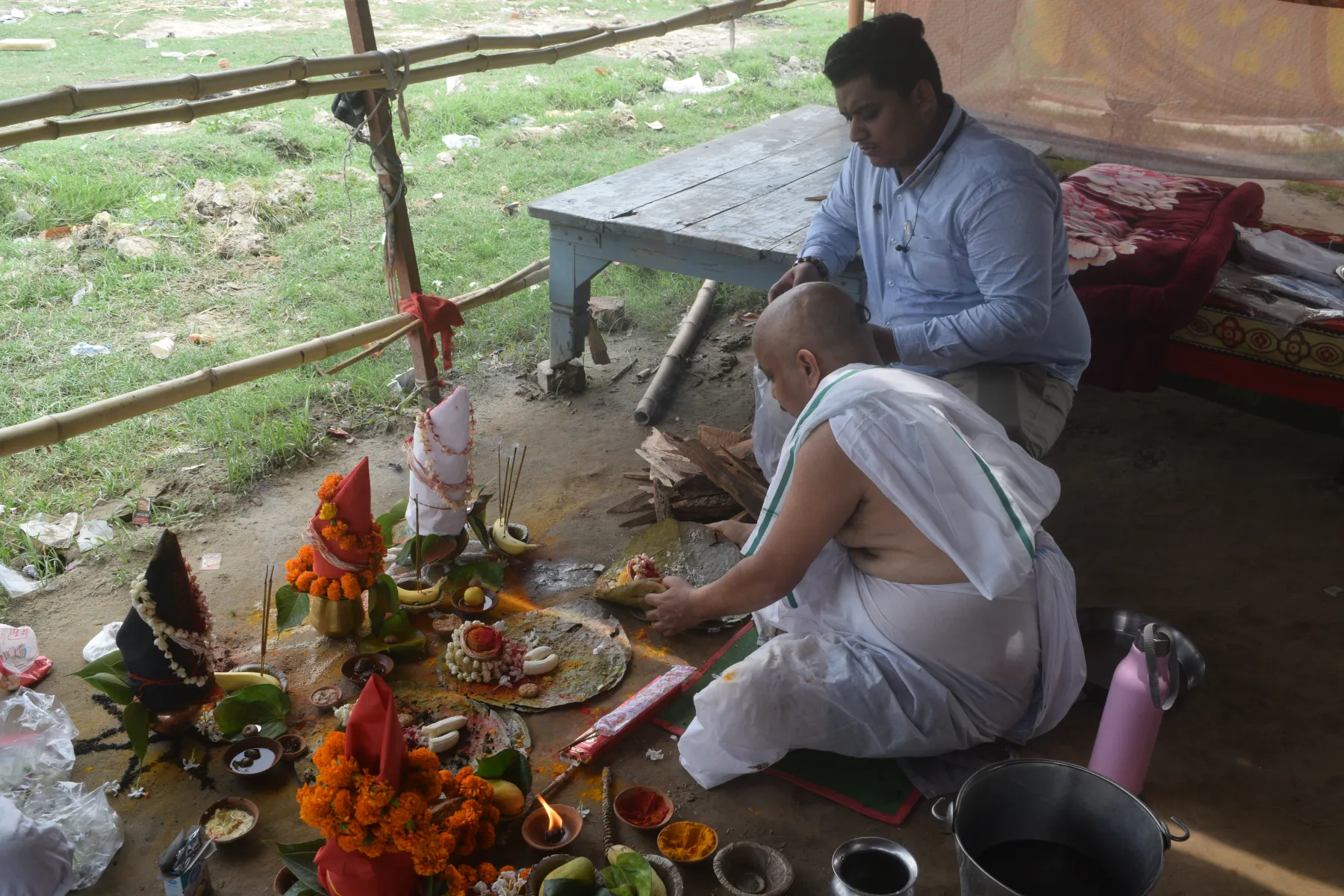
A pandit and participant seated with prepared offerings during Pind Daan
Pind Daan with prepared offerings. The exact ingredients and sequence vary by family tradition and place.
Plain languageWhat the term means
Family contextQuestions to bring
Place mattersLocal practice can differ
Pandit guidanceConfirm before you arrange
What makes it distinct

The pinda is the defining element. Tarpan is principally a water offering; Shradh is the wider remembrance framework that may include both.

When families ask

The context matters as much as the name.

Families commonly ask about Pind Daan during Pitrupaksha, on an annual tithi or during a journey to a sacred site such as Gaya. The appropriate occasion and place should be discussed rather than inferred from a page.

Who participates

Explain who is available.

Ask who may make the sankalpa and offerings in your family’s tradition. Tell the pandit who is available, how each person is related to the ancestor and whether anyone will join remotely.

A simple overview

What to discuss before the rite.

The steps can differ by family tradition and place. Use this overview to prepare questions, then ask the pandit to explain the actual sequence.

  1. 01

    The pandit hears the family details and states the sankalpa.

  2. 02

    Materials and the number of offerings are explained for that tradition.

  3. 03

    The family participates in the offerings and accompanying prayers.

  4. 04

    The closing handling of offerings, food or daan is explained locally.

Before the conversation

Keep these family details nearby.

  • Pinda ingredients specified for the local practice
  • Water, black sesame and darbha when requested
  • Ancestor names, relationships and gotra if known
  • Cloth, vessels, flowers or food only after confirmation

Wait before buying materials. The pandit should confirm what is needed for the rite, place and family tradition.

Questions worth asking the pandit.

  1. Is Pind Daan the complete rite here, or one part of Shradh?
  2. Which ancestor names and relationships should we prepare?
  3. How many pindas apply in this family’s case, and why?
  4. What happens to the offerings after the rite?
Choosing a place

Sacred sites families commonly ask us about.

These places are starting points. Ask whether this rite is traditionally performed at the site you are considering.

Before you decide

Pind Daan questions.

Practice can differ by lineage, region and family circumstances. Ask the pandit to explain what applies to your family.

Read all FAQs
Is Pind Daan the same as Tarpan?

No. Pind Daan is identified by the pinda offerings; Tarpan is identified by a water offering. They may appear in the same wider remembrance observance.

Must it be performed in Gaya?

Gaya has a particularly important association with Pind Daan, but family and regional traditions also recognise other settings. Ask what applies before planning travel.

Can the website tell us the correct number of pindas?

No. That can depend on the purpose, lineage and local sequence. The pandit should explain the number before the rite.

Pind Daan enquiry

Begin with what your family already knows.

We will reply by phone or WhatsApp and help you organise the questions. Nothing is booked or paid for on this website.