
Ganga ghats · Uttar Pradesh
काशी

Kashi

Rites on the ghats of the Ganga, in a city where the river and the old town are inseparable. Also the site where access and mobility need the most honest discussion.
Enquire about Kashi The ghats
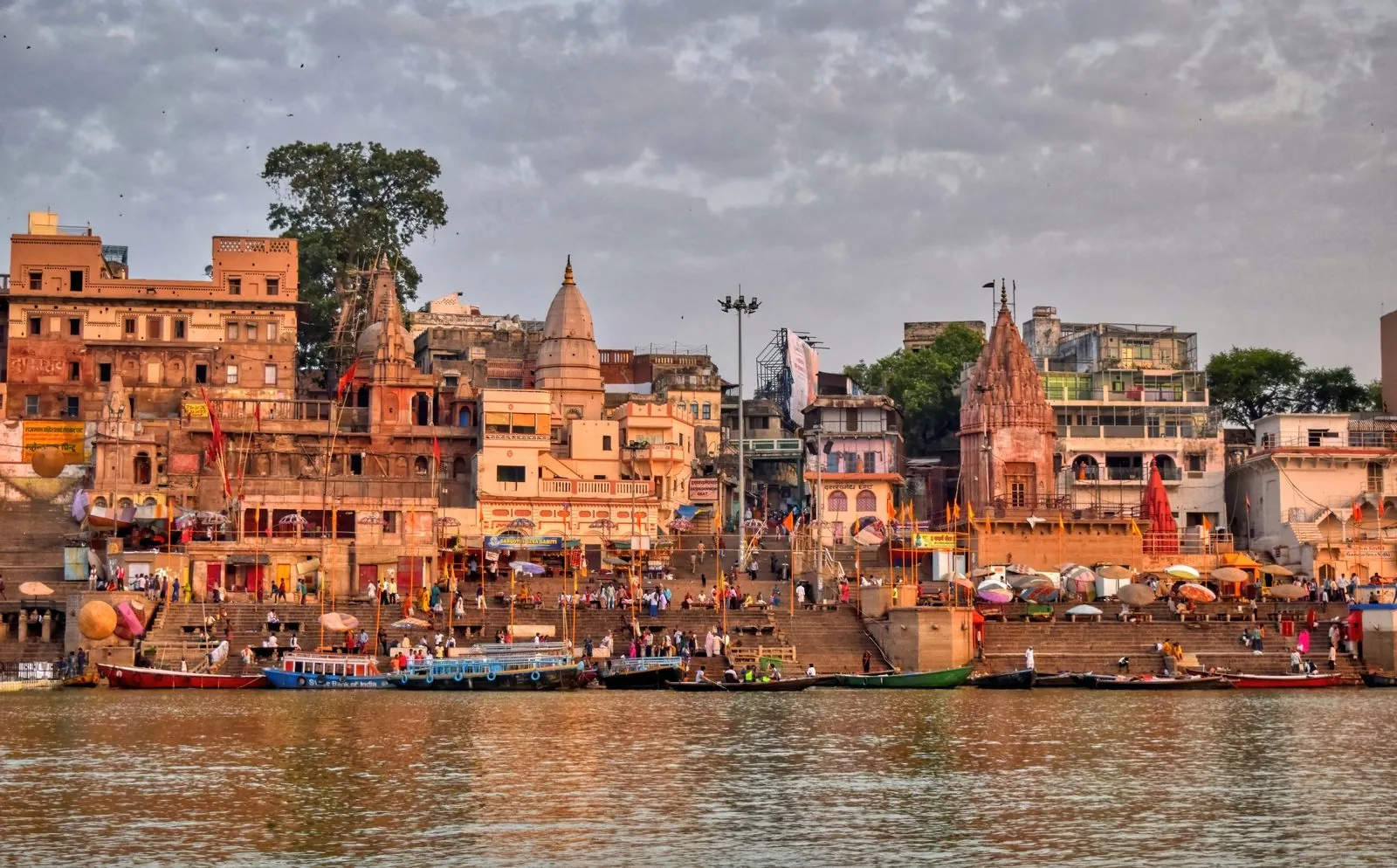
Historic ghats and boats along the Ganga in Kashi
The Ganga ghats at Kashi. The appropriate local setting is discussed after the family’s needs are understood.
Ghat orientation

Which ghat, and why it matters.

The ghats run for several kilometres along the western bank, and they are not interchangeable. They differ in how busy they are, how many steps there are, what is happening nearby, and what will be visible if your family is watching from a distance. Choosing the ghat is a real decision, and a coordinator will describe the options rather than assign one.

The Ganga riverfront at Kashi दशाश्वमेध

Dashashwamedh

The principal ghat

The busiest and best known, where the morning water offerings are made and the evening aarti is held.

Steps & footing: Broad stone steps; busy from early morning.
Stone ghats beside the Ganga in Kashi अस्सी

Assi Ghat

The quieter southern end

Where the Assi meets the Ganga. Calmer at sunrise, and frequently chosen by families who want an unhurried rite.

Steps & footing: Gentler approach; the easiest of the four.
The layered riverside architecture of Kashi मणिकर्णिका

Manikarnika

The cremation ghat

Cremation continues here without pause. Ancestral rites are performed on adjoining steps, not in the pyre area.

Steps & footing: Crowded and uneven; not advised for limited mobility.
A quieter section of the Kashi riverfront पिशाच मोचन

Pishach Mochan

A tank, away from the river

A water tank in the city rather than a ghat, associated with rites for those whose passage is held to be unresolved.

Steps & footing: Reached through lanes; step access varies.
River timing

Rites are generally performed in the early morning, when the river is calmest and the ghats are least crowded. In monsoon the water rises and rites move to higher steps — the location shifts, the procedure does not. A coordinator describes current conditions rather than predicting them.

The old city

Lanes, not roads.

The approach to most ghats is on foot through the old city — lanes that are often too narrow for a car, sometimes stepped, and busy from early morning. This is part of what makes Kashi what it is, and it is also the single practical thing families most need to know before they decide.

For an elderly parent, someone using a wheelchair, or anyone who cannot manage steps, this changes what is workable. It does not rule Kashi out — there are ghats with easier access, and rites can be arranged so that the family gathers where the walking is manageable. But it should be discussed first rather than discovered on the day.

Getting there & mobility

Tell us what the family needs.

We would rather have this conversation early than have someone struggle on the morning of a rite. There is no version of this that we treat as a lesser arrangement.

If someone cannot manage steps. Say so at the outset. Some ghats have a far gentler approach than others, and the rite can be arranged where the walking is shortest.
If a vehicle needs to get close. Most lanes will not take a car. A coordinator will explain how close a vehicle can reach the particular ghat being considered.
If nobody is travelling. Entirely ordinary. The rite is performed on the family’s behalf and a coordinator will describe how you can follow it.
Travel
By air
Lal Bahadur Shastri (VNS), approx. 26 km
By rail
Varanasi Junction and Banaras stations
Nearby
Sarnath, approx. 10 km
Last stretch
On foot through the old city for most ghats
Why Kashi

A city that does not keep the dead at its edge.

In most cities the rites of death happen somewhere out of the way. In Kashi they happen in the middle of everything — a few steps from where people bathe, buy milk and sell flowers. Families who arrive expecting solemn separation are often struck by how ordinary it all is, and how unfrightened.

The city has received rites for the departed for a very long time, and that continuity is much of why families choose it. Elders frequently recognise the ghats on sight, which matters when someone is watching from a bed in another country and needs to know where their mother’s rite is taking place.

What surprises families is not the solemnity. It is how unremarkable the presence of death is here.

We describe what the city is rather than what it promises. Claims about liberation or spiritual outcome are matters of belief and for a qualified pandit to speak to, not for this page.

Rites families ask about here

What families arrange on the ghats.

These are the rites families most often ask about here. A qualified pandit should explain which, if any, fits your family’s tradition.

Tarpan तर्पण Customary here The water offering, made into the Ganga at sunrise. The most commonly arranged rite here. Understand this rite → Tripindi Shradh त्रिपिंडी Customary here Families associate this rite with Kashi, and Pishach Mochan in particular. A pandit will advise on suitability. Understand this rite → Mahalaya Shradh महालय Customary here Arranged during the fortnight, on the ghats, for families observing it here. Understand this rite → Pind Daan पिंड दान Customary here Performed here for families whose connection is to Kashi rather than to Gaya. Understand this rite →
Before you enquire

What helps to have ready.

Bring whatever your family knows. Missing names, dates or gotra details are common.

  • Names of those being remembered, as your family says them.
  • Gotra if it is known — many families do not know theirs, and that is provided for.
  • Any date of passing you hold; the tithi can be worked out from a calendar date.
  • Who intends to be present, and what walking or steps they can manage.
A typical order — timings vary

How a morning unfolds.

  1. Materials are assembled Gathered in the lanes above the ghat. Photographs can be sent to you beforehand.
  2. Down to the ghat The pandit takes his place on the steps as the river begins to lighten.
  3. Sankalpa and offerings The vow, then the offerings made into the Ganga, each ancestor named.
  4. Closing and blessing Water offerings for both family lines, then a blessing spoken for the family.
The exact time depends on the tithi, the ghat and local arrangements for that morning.
Terms you may hear: tarpan, sankalpa, gotra, tithi. A qualified pandit should answer questions specific to your family.
Asked about Kashi

Questions specific to this place.

Will we see cremations during our rite?
Possibly, depending on the ghat. Manikarnika burns continuously and the city does not screen death from view. If you would rather avoid it entirely, say so and the rite will be arranged at Assi or another quieter ghat. Many families ask for this, and it changes nothing about the rite itself.
Can we manage the ghats with an elderly parent?
Often yes, but it depends on the ghat and should be planned. Some approaches involve many steps and narrow lanes; others are far gentler. Tell a coordinator who is coming and what they can manage, and they will suggest where to hold the rite. If travelling is not realistic, the rite can be performed on the family’s behalf.
Why do families associate Tripindi shradh with Kashi?
Pishach Mochan in Kashi is the place families most often name in connection with this rite. It can also be arranged elsewhere. Whether it is the right rite for your family is a question for a qualified pandit, and a coordinator will not decide it for you.
Does Kashi guarantee a particular spiritual outcome?
We do not make claims of that kind. There are long-held beliefs about this city, and your pandit can speak to them within your family tradition. What we can describe is what happens, where, and what your family would need to arrange.
All frequently asked questions →
Related reading

Before you enquire.

Blog Performing rites from abroad What participation can look like Blog We don’t know our gotra What tradition provides for Trust How pandits are verified What we check before anyone is matched
Enquire about Kashi

Tell us who is coming, and what they can manage.

A coordinator will suggest a ghat that suits the family, describe what is customary, and explain what participation from a distance can look like. Nothing is booked or paid for on this website.

Call or WhatsApp +91 83539 99366 CallWhatsApp
Call or WhatsApp +91 91152 34555 CallWhatsApp
Email info@pitrupaksha.org
Already selected
Sacred site
Kashi
Rite
To be discussed
Continue to the enquiry form

Kashi is already selected. Add the details you know and we will reply by phone or WhatsApp.

Quick security check

This appears only when the anti-spam layer needs one extra confirmation.

We will reply by phone or WhatsApp. Nothing is booked or paid for on this website.

We use these details to reply to this enquiry.

What we will check
  • Kashi Khanda — the standing of the city Ask a qualified pandit to explain how this tradition applies to your family.
  • Ghat access, steps and local practice We will check current local conditions before your family travels.
Before you travel
Before your family travels
Ask the pandit to explain the religious procedure.
Ask us to check access and local conditions for your date.
Tell us in advance if photographs or a live call matter to you.
Before travelling, ask us about the exact route, access, mobility, photography and seasonal conditions for your date.