
Shipra · Madhya Pradesh
उज्जैन

Ujjain

A city on the Shipra, built around a shrine to Mahakal — time itself. Ancestral rites here centre on Siddhavat, an ancient banyan a little downstream of the ghats.
Enquire about Ujjain If you were told to come here
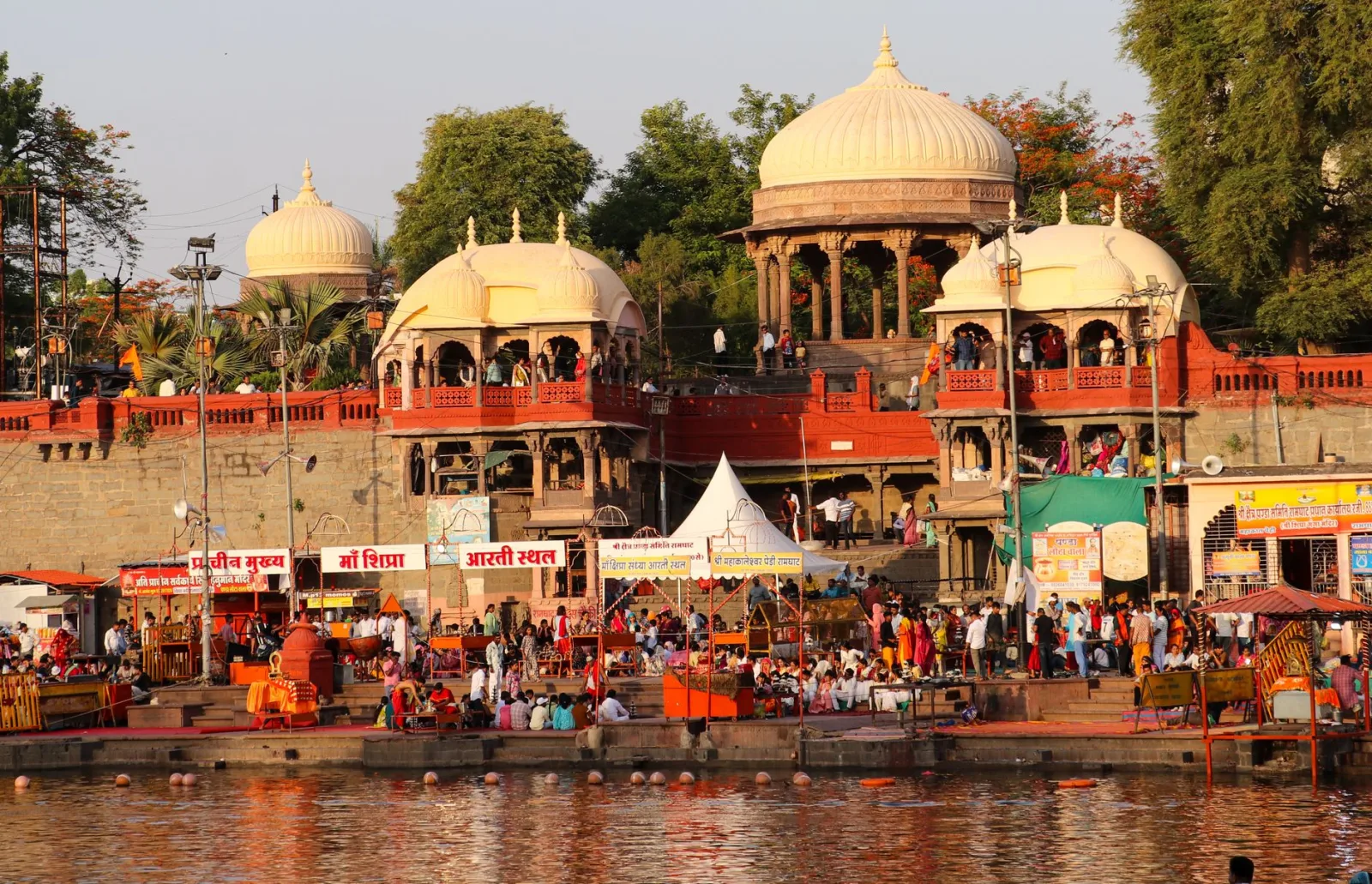
The Shipra riverfront and sacred architecture in Ujjain महाकाल
Ujjain’s sacred riverfront. Ancestral rites here are closely associated with Siddhavat beside the Shipra.
If you were told to come here

We will not sell you a remedy.

More families ask about Ujjain on somebody else’s instruction than about any other site we coordinate. An astrologer has named a condition — often pitru dosh — and prescribed a rite here to remove it. Sometimes with urgency, and sometimes with a figure attached.

We take those enquiries seriously and we answer them plainly. We do not diagnose such conditions, we cannot confirm a diagnosis someone else has made, and we will not tell you that a rite arranged through us resolves one. What we can do is coordinate an ancestral rite at Ujjain, performed properly, and let you decide what it means.

If anyone tells you a fee here fixes a misfortune, be careful. That is not a claim we make.
We do not diagnose
No one here reads a chart or determines whether a condition applies to your family. That is not our work.
We do not promise outcomes
We will not say that a rite arranged through us removes an affliction, reverses misfortune, or resolves a diagnosis.
We will not add urgency
If you were told a date is critical, we will say plainly what we know and what we do not. No pressure comes from us.
A rite is still a rite
None of this means the rite is lesser. It is performed properly, at the traditional place, with your ancestors named.
Siddhavat

The rites happen at a tree, not the temple.

Families arriving for the first time often expect the ancestral rite to take place at Mahakaleshwar, because that is the shrine Ujjain is known for. It does not. It happens at Siddhavat, an ancient banyan on the bank of the Shipra a little way out from the main ghats — a quieter, plainer place than the temple, and the one that matters for this purpose.

Tradition counts Siddhavat among a small group of sacred banyans, alongside Akshayavat at Prayagraj and Vanshivat in the Braj region — trees under which ancestral offerings have been made for a very long time. If you have arranged a rite at Prayagraj before, the setting will feel familiar.

Families often combine darshan at Mahakaleshwar with a rite at Siddhavat. Ask the proposed pandit to explain the religious relationship, sequence and any family-specific difference before the visit.
Why Ujjain

A city that measures time.

Ujjain has kept time for a very long time — astronomically, as a reference meridian for Indian calculation, and devotionally, in a shrine to Mahakal, the lord of time. Families who feel their remembrance has fallen out of order often find that association meaningful: a place concerned with time is a reasonable place to take up something long postponed.

Beyond that, it is chosen for ordinary reasons. It is well connected, comfortable in most seasons, less crowded than Kashi or Gaya outside festival periods, and familiar ground for families from Malwa, Gujarat and Maharashtra whose pandits often know their household’s particular customs.

It is easy on a family

Well connected by rail and by air through Indore, and comfortable to move around in most seasons — which matters when elders are travelling.

Quieter than the larger sites

Outside festival periods there is space at the riverside in a way there often is not at Kashi or Gaya.

Familiar to some families

For households from Malwa, Gujarat and Maharashtra, pandits here often know the particular customs a family keeps.

The city and its places

Where a visit here goes.

The Shipra riverfront at Ujjain सिद्धवट

Siddhavat

Where the rite happens

An ancient banyan on the bank of the Shipra, a little out from the main ghats. Plainer and quieter than the temple, and the traditional place for ancestral offerings here.

Access: Short drive from the city centre, level ground, seating available.

Sacred architecture beside the Shipra राम घाट

Ram Ghat

The principal ghat

The main riverside steps on the Shipra, where bathing and evening aarti take place. Busy at dawn and at dusk.

Access: Central, stepped down to the water, crowded at aarti.

The temple-city landscape of Ujjain महाकालेश्वर

Mahakaleshwar

The shrine the city is known for

The jyotirlinga temple at the heart of Ujjain. Darshan is usually taken alongside the rite, though the rite itself is not held here.

Access: Queues can be long; the sanctum is reached by steps.

The Shipra waterside in Ujjain शिप्रा

The Shipra

The river

The river the city sits on, and where water offerings are made. Its level varies considerably with the season.

Access: Reached at Ram Ghat and at Siddhavat.

Rites families ask about here

What families arrange at Siddhavat.

Pind Daan पिंड दान Customary here The rite most families arrange here, performed at Siddhavat rather than at the temple. Tarpan तर्पण Customary here Water offerings into the Shipra, often alongside the pind offerings on the same morning. Tripindi Shradh त्रिपिंडी Customary here Asked about here, though families are as often directed to Gaya or Kashi for it. A coordinator will discuss which suits your situation.
A typical order — timings vary

How a morning unfolds.

  1. Bathe at the river At Ram Ghat, before the rite, as is customary here.
  2. Darshan at Mahakaleshwar Most families take darshan before the rite. Queue times vary considerably.
  3. Sankalpa at Siddhavat The vow that opens the rite, naming the family and the ancestors remembered.
  4. The offerings, then closing Made beneath the banyan, each ancestor named, followed by a blessing for the family.
The sequence is customary, but the exact time can vary. We will share the practical timing before the day.
Terms you may hear: pind, sankalpa, gotra, tithi. A qualified pandit should answer questions specific to your family.
Getting there

Reachable without difficulty.

  • Fly to Indore (IDR), then roughly an hour by road.
  • Rail direct to Ujjain Junction, which is well served.
  • Siddhavat is a short drive from the centre; level ground when you arrive.
  • Nobody has to travel — rites can be performed on a family’s behalf.
When to come

Open all year.

Any time of year
Nothing closes seasonally here. Winter and the weeks after the monsoon are the most comfortable.
Pitrupaksha
Busier, and worth arranging further ahead. Still workable.
Simhastha years
Large festival periods can change traffic and access. Ask the coordinator to check the calendar and local plan for your actual date.
Asked about Ujjain

Questions specific to this city.

An astrologer said we must do a rite here for pitru dosh. Can you do it?
We can coordinate an ancestral rite at Ujjain, performed properly at Siddhavat, with your ancestors named. What we will not do is confirm the diagnosis or tell you the rite removes it — we are not in a position to know either. Tell us what you were told and we will answer as straightforwardly as we can, including where we think you are being pressured.
Why is the rite at a tree and not at Mahakaleshwar?
Because that is where it has traditionally been performed. Siddhavat, the ancient banyan on the Shipra, is the ritual place for ancestral offerings at Ujjain; Mahakaleshwar is the shrine the city is famous for, and darshan there is usually taken alongside. Families often expect the temple and are surprised, so it is worth knowing before you arrive.
Is Ujjain a lesser site than Gaya for this?
Different rather than lesser, and the comparison is not one we would make for you. Gaya carries the strongest association with rites for ancestors long unremembered. Ujjain is chosen for its own traditional standing, and for practical reasons — access, calm, and pandits familiar with particular regional customs. A coordinator can talk through the difference without ranking them.
Someone quoted us a large fee to have this done urgently. Is that normal?
It is not how we work. We do not use fear to push an urgent remedial package or treat the severity of a claimed affliction as a reason for pressure. If another proposal depends on fear, pause and ask for a plain explanation of the rite, its basis and the next step.
All frequently asked questions →
Before you enquire

What helps to have ready.

  • Whether someone has prescribed this rite, and what exactly they said.
  • Names of those being remembered, as your family says them.
  • Gotra and any date of passing, if your family holds them.
  • Who would travel, and whether anyone needs seating or step-free access.
Other sites families consider
गया Gaya The site most associated with ancestors long unremembered. प्रयागराज Prayagraj Also a sacred banyan, at Akshayavat, with rites at the confluence. काशी Kashi Year-round and easy to reach, with a long ghat tradition.
Enquire about Ujjain

Tell us what you have been told, and we will be straight with you.

If someone has prescribed a rite here, say so — it helps us answer honestly rather than vaguely. Nothing is booked or paid for on this website.

Call or WhatsApp +91 83539 99366 CallWhatsApp
Call or WhatsApp +91 91152 34555 CallWhatsApp
Email info@pitrupaksha.org
Already selected
Sacred site
Ujjain · Siddhavat
Rite
To be discussed
Continue to the enquiry form

Ujjain is already selected. Add the details you know and we will reply by phone or WhatsApp.

Quick security check

This appears only when the anti-spam layer needs one extra confirmation.

We will reply by phone or WhatsApp. Nothing is booked or paid for on this website.

We use these details to reply to this enquiry.

What we will check
  • The basis used to explain Siddhavat’s place in ancestral rites and among the sacred banyans
Before you travel
Before your family travels
Ask the pandit to explain the religious procedure.
Ask us to reconfirm Siddhavat access and meeting details for your date.
Tell us about any mobility, language or participation needs.
Festival periods can alter traffic and access. The coordinator should run a fresh local check.