
The context matters as much as the name.
If relatives use different calendars or regional names, note each one rather than assuming they conflict. A local panchang and family custom can then be discussed together.
“Mahalaya” is used differently across regions: for the Pitrupaksha period, its closing Amavasya, or a regional day of ancestral remembrance. A family should first confirm which date and observance its tradition means by Mahalaya Shradh.
Use this guide as an introduction, then ask a qualified pandit what applies to your family’s tradition.
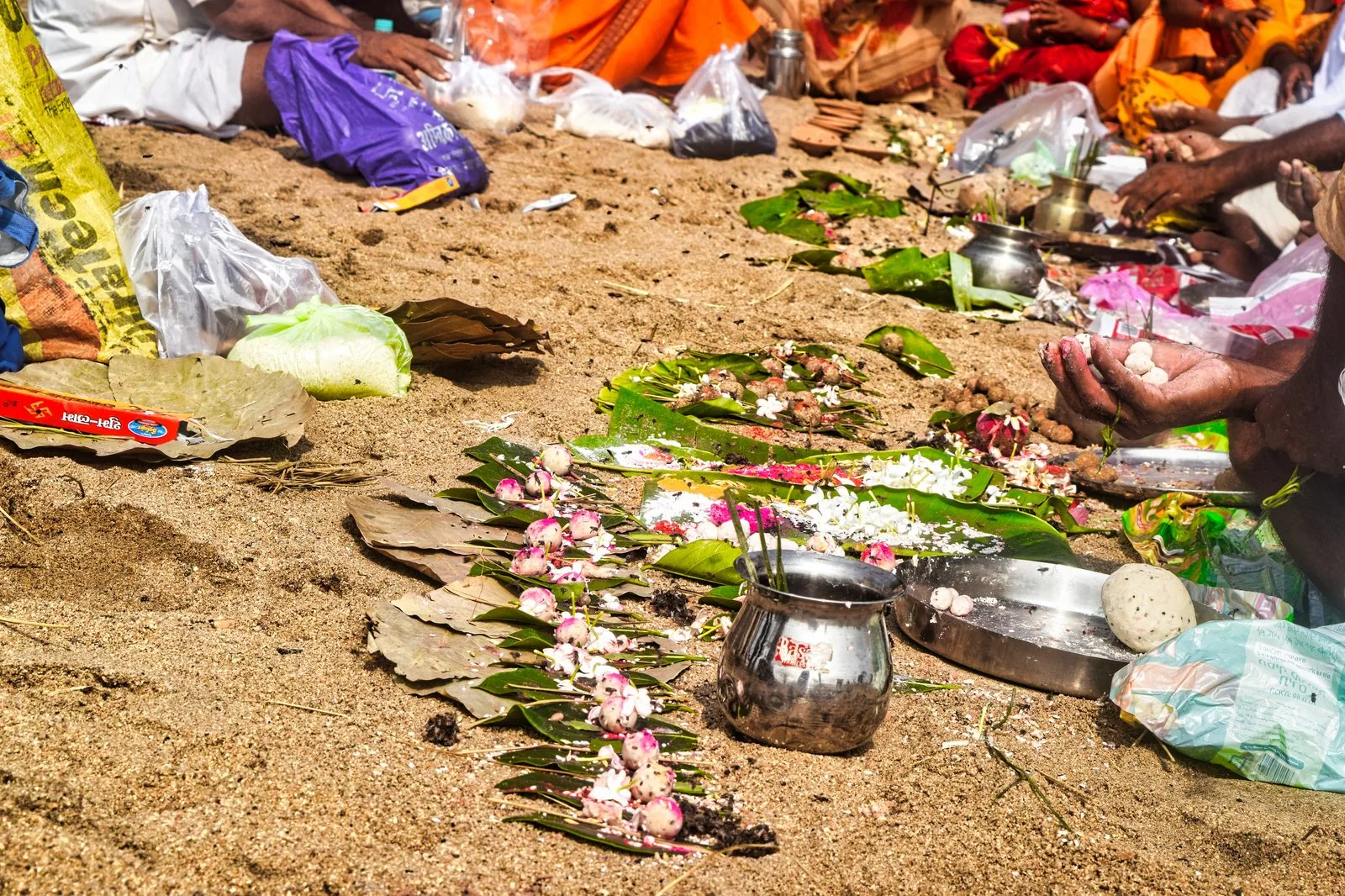
If relatives use different calendars or regional names, note each one rather than assuming they conflict. A local panchang and family custom can then be discussed together.
Tell the pandit where the family’s tradition comes from and what older relatives call the observance. That context is often more useful than selecting a generic web description.
The steps can differ by family tradition and place. Use this overview to prepare questions, then ask the pandit to explain the actual sequence.
Wait before buying materials. The pandit should confirm what is needed for the rite, place and family tradition.
These places are starting points. Ask whether this rite is traditionally performed at the site you are considering.
Practice can differ by lineage, region and family circumstances. Ask the pandit to explain what applies to your family.
Read all FAQsSometimes the terms are used for the same closing day; elsewhere “Mahalaya” is broader. Clarify the regional usage before comparing them.
The observed tithi can depend on location and calendar method. Confirm it for the place where the family will observe the rite.
No universal list should be inferred from the name alone. Materials follow the actual observance and family practice.
We will reply by phone or WhatsApp and help you organise the questions. Nothing is booked or paid for on this website.