
Shradh and Tarpan at the Triveni Sangam in Prayagraj
Families visiting Prayagraj for Shradh or tarpan can prepare thoughtfully by confirming family custom, local guidance, river access and practical needs.
In this article
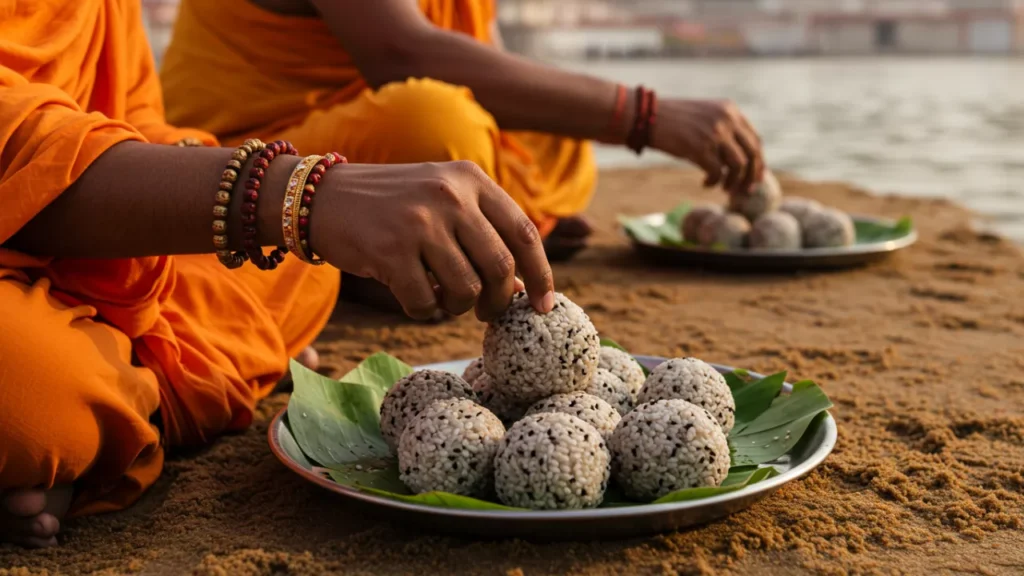
The Triveni Sangam gives a Prayagraj observance a distinct sense of place. The District Prayagraj describes the Sangam as the meeting of the Ganga and Yamuna with the traditionally understood, unseen Saraswati. Families who come here for Shradh or tarpan often do so because this river confluence is part of an inherited pilgrimage tradition—not because a spiritual outcome can be measured or promised.
This guide explains what to clarify before a visit, what the river setting may involve, and how to approach local practice without turning one family's custom into a rule for everyone.
Why the Sangam setting matters to families
A tirtha journey separates remembrance from the pace of an ordinary day. Travel, time by the river and gathering relatives can create space to recall names, stories and family responsibilities with attention. At Prayagraj, that experience is centred on the confluence.
The place itself does not make careful preparation unnecessary. Shradh and tarpan practices differ by region, family lineage and the guidance a family follows. The relevant question is therefore not “How much stronger is a rite here?” It is “What does our family intend to observe, and how can we do that safely and respectfully in this setting?”
For a wider introduction to the city, use the Prayag city guide. For the meaning and place of water offerings, see the tarpan topic hub.
What families may encounter at the river
The district's visitor page notes that priests assist pilgrims from platforms near the mid-river area and that boats operate from the ghat. Conditions, access points and crowd arrangements can change with river level, weather, festivals and local administration.
Before boarding a boat or approaching the water, confirm:
- the agreed meeting point and the name of the person guiding the family;
- whether the planned observance is on the bank, a platform or another permitted area;
- current river and weather conditions;
- mobility needs for older relatives, children or anyone who finds steps and boats difficult;
- what the local operator provides and what the family is expected to bring; and
- which instructions come from local safety personnel and which are family-specific ritual guidance.
No family member needs to enter water beyond a safe, permitted depth to make the visit sincere. Follow current local instructions, use available safety equipment, and avoid any arrangement that feels hurried or unclear.
Questions to settle before the journey
Which family tradition are you following?
Ask the person who normally advises the family about the intended tithi, the relatives being remembered, the names and gotra information that may be requested, and whether the family has a customary sequence. Write the details clearly in advance rather than trying to reconstruct them at a crowded ghat.
What is the purpose of this visit?
Some families come for a specific annual observance. Others include tarpan within a broader pilgrimage or gather after a long period apart. Stating the purpose helps a local priest understand the request and reduces the chance that extra practices will be assumed.
What should be confirmed locally?
Ask about the duration, location, language of guidance, materials, accessibility and total expected cost before beginning. If the explanation differs from what the family was taught, pause and consult the family's customary authority. A local variation can be respected without being presented as the only valid method.
The Pitrupaksha pilgrimage planning guide offers a broader checklist for travel, health and documentation.
Respect at a shared river place
The Sangam is used by pilgrims, residents, workers and visitors. A family observance should leave room for others and should not add plastic, packaging, cloth or non-biodegradable material to the water. Keep belongings together, ask before photographing a priest or another family, and treat quiet grief as private.
If flowers, food or other materials are part of the family's practice, confirm the currently permitted way to handle them. “Traditional” does not automatically mean that every disposal method is safe for the river.
For more context on water and remembrance, read Why Rivers Matter in Pitrupaksha Traditions.
If travel is not suitable
Age, health, caregiving, finances or river conditions may make a Sangam visit impractical. This article does not rank a journey above a home observance. Families can ask their customary guide what form of remembrance is appropriate where they are, and whether travel should be postponed rather than forced.
If only some relatives travel, agree beforehand on names, intention, communication and privacy. No one should be pressured to join a boat, enter the river, share personal family details publicly or purchase an unplanned addition.
A concise preparation checklist
- Confirm the family purpose, tithi and names with the appropriate family guide.
- Choose the location and local guide before arrival where possible.
- Check official travel, weather, river and crowd information close to the visit.
- Discuss mobility, medication, hydration and rest needs.
- Agree on the scope, materials, timing and costs before beginning.
- Follow local safety directions at the bank and on boats.
- Keep the river and shared ghat clean.
- Record family memories after the observance while elders can still add context.
Keeping the focus on remembrance
Prayagraj's importance lies in its living confluence tradition and in the meaning families bring to the journey. A careful visit does not need exaggerated comparisons or guaranteed results. Clear intention, informed local coordination, river safety and respect for family variation give the observance a sound foundation.
Planning around this sacred place?
Share the rite, preferred date, language and travel needs. A coordinator will reply with what can be checked next; an enquiry is not a booking.
Ask about the place